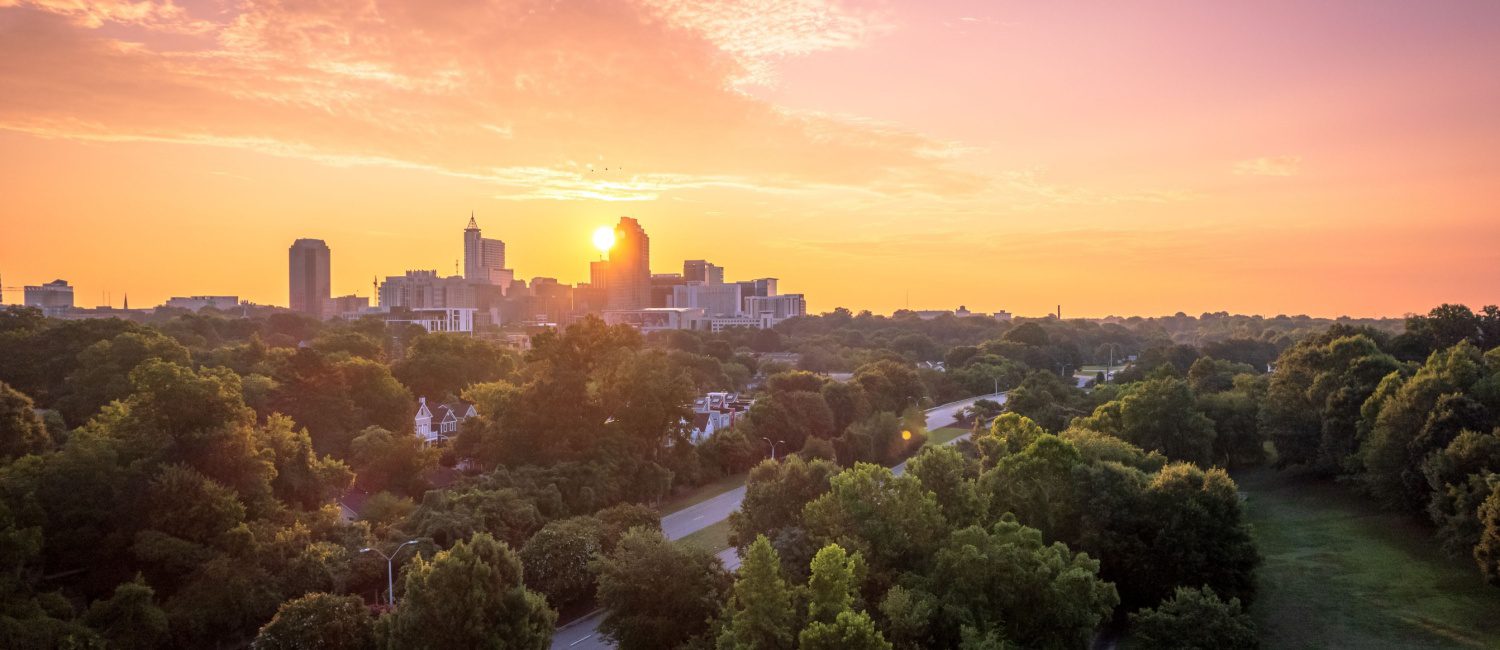
Raleigh is a city growing in popularity thanks to its southern charm, booming tech industry, and world-class educational institutions. For those considering living in Raleigh, weighing the pros and cons is essential.
There’s plenty of reasons to move to Raleigh, but like any city, there are some downsides. Here’s what you need to know before making Raleigh your home.

Raleigh at a glance
Walk Score: 82 | Bike Score: 88 | Transit Score: 71
Median Sale Price: $440,000 | Average Rent for 1-Bedroom Apartment: $1,377
Raleigh neighborhoods | Houses for rent in Raleigh | Apartments for rent in Raleigh | Homes for sale in Raleigh
1. Pro: Booming job market
Raleigh’s job market is thriving, especially in tech and healthcare. Research Triangle Park, connected to some of North Carolina’s top colleges and home to major companies like IBM and Cisco, creates a steady demand for professionals. Jobs in education and government also provide a stable employment base for residents.
2. Con: Traffic congestion
With rapid growth comes increased traffic. While Raleigh’s roads are generally well-maintained, rush hour can be challenging. Congestion, particularly on I-440 and I-40, is a daily hurdle for commuters.
3. Pro: Affordable cost of living
Compared to other tech cities, Raleigh’s cost of living remains manageable. Rent prices and home costs are lower for Raleigh locals compared to those living in New York or San Francisco, making it an appealing option for families and young professionals.

4. Con: Hot and humid summers
Summers in Raleigh can be uncomfortably hot and humid. With temperatures often reaching the 90s and staying there for weeks, it’s not uncommon for the humidity to make it feel even warmer. Outdoor activities can become less enjoyable during the hottest months.
5. Pro: World-class academics
Raleigh is part of the Research Triangle, which includes world-renowned universities like North Carolina State University. The presence of these institutions offers educational opportunities and a constant flow of events, lectures, and research initiatives. Beyond that, the university also cements Raleigh’s reputation as a top-tier North Carolina college town.
6. Con: Underwhelming public transportation
Public transportation in Raleigh is not as comprehensive as what you’ll find in many larger cities. The GoRaleigh bus system is helpful but may not meet all your commuting needs. Most residents rely on cars for transportation, which can add to living expenses.

7. Pro: Green spaces and parks
Raleigh boasts an abundance of parks and green spaces. William B. Umstead State Park and the Raleigh Greenway system provide plenty of outdoor recreation options for hiking, biking, and picnicking, helping residents stay healthy and connected to nature.
8. Con: Rising housing demand
Raleigh’s increasing popularity has led to a higher demand for housing. While housing is still affordable compared to other major cities, competition for desirable properties, especially in trendy neighborhoods, has increased, making it more difficult for newcomers to find housing in Raleigh.
9. Pro: Great food scene
Raleigh has a thriving local food scene. From farm-to-table restaurants to food trucks, you’ll find a variety of delicious options, including Southern comfort foods and international cuisine. Farmers’ markets also offer fresh, local produce year-round.

10. Con: Pollen and allergies
Springtime in Raleigh brings an abundance of tree pollen, which can be challenging for those with allergies. The heavy layer of yellow pollen covering everything in sight is a common complaint among residents during this season.
11. Pro: Thriving arts community
Raleigh is home to several performance venues and museums, like the North Carolina Museum of Art and the Martin Marietta Center for the Performing Arts. Residents enjoy shows, concerts, and exhibits throughout the year.
12. Con: Bugs and mosquitoes
Living in Raleigh means dealing with a variety of bugs, particularly mosquitoes during the summer. The warm, humid climate creates the perfect environment for insects, and residents often find themselves battling mosquitoes, especially near bodies of water.
13. Pro: Strong sense of community
Raleigh’s neighborhoods have strong community ties. From farmers’ markets to local festivals, there are plenty of opportunities for residents to get involved and meet neighbors. The city’s Southern hospitality is noticeable, making it easier to feel at home quickly.